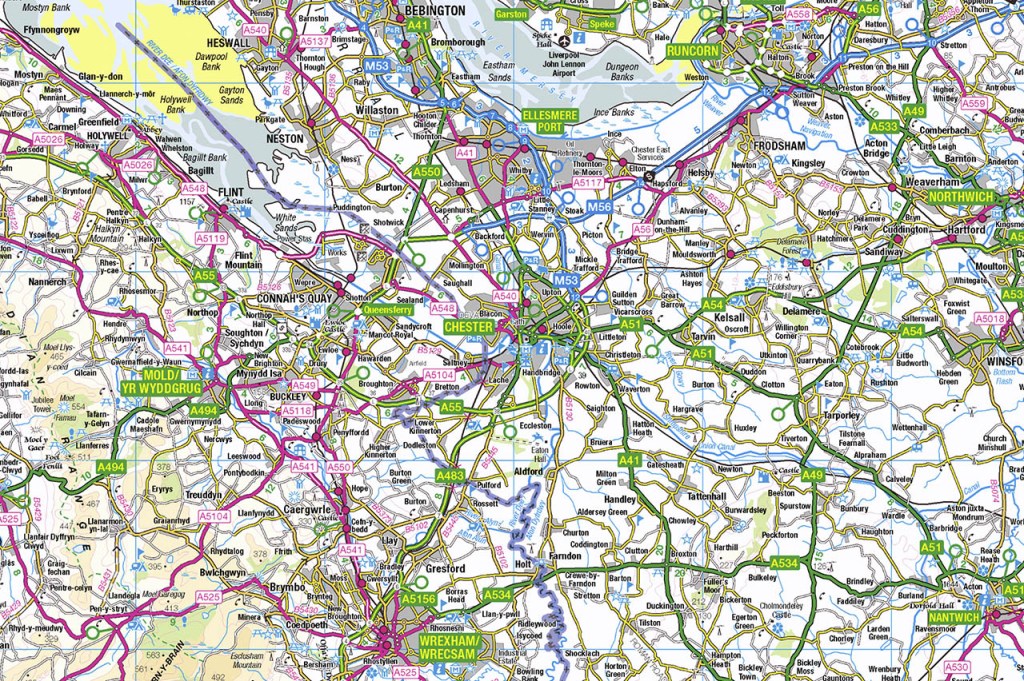
A little bit about Ordnance Survey.
The Ordnance Survey (OS) is Great Britain’s national mapping agency, renowned for its detailed and accurate cartographic work. Its origins trace back to the aftermath of the Jacobite uprising in 1745, when the British military recognized the need for precise maps to navigate and control the Scottish Highlands. This led to the commissioning of William Roy, a young engineer, to conduct an initial survey of the area using rudimentary methods .
Officially established on 21 June 1791, the OS began its first major project, the Principal Triangulation of Great Britain, the same year. This extensive geodetic survey aimed to establish precise geographical coordinates across the country, providing a foundation for accurate mapping . The agency’s name, “Ordnance Survey,” reflects its military origins, with “ordnance” referring to military supplies, including maps.
Over time, the OS transitioned from its military roots to serve civilian purposes, producing maps for various uses, including land taxation, urban planning, and outdoor recreation. Today, it operates as Ordnance Survey Ltd, a government-owned company, continuing its mission to provide up-to-date geographic data for Great Britain.
Types of Ordnance Survey Maps
The OS offers a diverse range of maps catering to different needs:
- OS Explorer Maps: At a 1:25,000 scale, these maps are ideal for walkers, cyclists, and outdoor enthusiasts, showing detailed information on footpaths, rights of way, and open access land .
- OS Landranger Maps: With a 1:50,000 scale, they cover larger areas and are suitable for general navigation, displaying roads, tourist attractions, and other significant features.
- OS Tour Maps: Designed for tourists, these maps highlight places of interest, scenic routes, and tourist facilities.
- OS Road Maps: Focusing on major roads and transport links, these maps are useful for drivers and logistics planning .
- OS Urban Maps: Providing detailed views of urban areas, these maps assist in city navigation and planning .
- Themed Maps: These include maps with specific focuses, such as historical themes, film locations, or unique place names, offering both educational and entertainment value.
- OS MasterMap: A comprehensive digital mapping database, OS MasterMap records every fixed feature in Great Britain larger than a few meters, providing detailed topographic information for professional and commercial use .
The Ordnance Survey continues to evolve, embracing digital technologies while maintaining its commitment to accurate and detailed mapping, serving both the public and private sectors in various applications.
For a visual overview of the different types of OS maps and how to use them, you might find this video helpful:
Ordnance Survey (OS) maps in the UK use specific symbols and colours to represent different types of public rights of way. These symbols vary slightly between the 1:25,000 scale Explorer maps and the 1:50,000 scale Landranger maps. Here’s a summary:
Footpath
- OS Explorer (1:25,000): Green dashed line.
- OS Landranger (1:50,000): Pink dashed line.
- Waymarking on the ground: Yellow arrows.
- Access: Pedestrians only.
Bridleway
- OS Explorer (1:25,000): Green dashed line with longer dashes.
- OS Landranger (1:50,000): Pink dashed line with longer dashes.
- Waymarking on the ground: Blue arrows.
- Access: Pedestrians, horse riders, and cyclists (cyclists must give way to others).
Restricted Byway
- OS Explorer (1:25,000): Green dashed line with alternating short and long dashes.
- OS Landranger (1:50,000): Pink dashed line with alternating short and long dashes.
- Waymarking on the ground: Plum or purple arrows.
- Access: Pedestrians, horse riders, cyclists, and non-motorized vehicles (e.g., horse-drawn carriages).
Byway Open to All Traffic (BOAT)
- OS Explorer (1:25,000): Green dashed line with crosses.
- OS Landranger (1:50,000): Pink dashed line with crosses.
- Waymarking on the ground: Red arrows.
- Access: All users, including motor vehicles.
These symbols are standardized across OS maps to help users identify the type of path and the permitted users. It’s important to refer to the map legend for specific symbol interpretations, especially when using different map scales.
Statistics.
Public Footpaths
There are 386,352 public footpaths in England and Wales, which add up to a total of 106,680 miles.
Public Bridleways
There are 66,161 public bridleways in England and Wales, totalling of 25,997 miles.
Restricted Byways
There are 10,177 restricted byways in England and Wales, adding up to a total of 3,370 miles.
Byways Open to All Traffic
There are 8,502 byways open to all traffic (BOATs) in England and Wales, totalling 3,313 miles.
Summary.
Riding gravel give us riders a fantastic opportunity to visit places the wider general public rarely get to see. Make the most of it, but do it legally.
The hope is that this article will give you a good understanding of where and where not you can ride in the UK. I personally love a map, and was fascinated with what I found out about the Ordnance Survey – do you use paper maps to plan your route? Which apps do you use to plan your rides?
Tell me what you think of this article in the comments below, and don’t forget to hit the subscribe link to get these articles delivered straight to your inbox.
Ready to Explore More Gravel Adventures?
Gravel riding in the UK is as much about discovery as it is about the ride itself. Knowing where you can legally take your bike—whether that’s a bridleway in the Lake District, a forest track in Galloway, or a byway across the Cambrian Mountains—means more freedom, fewer worries, and better adventures.
If you’ve found this guide useful, why not stick around? We regularly share:
- Route guides & ride inspiration
- Updates on cycling access & laws
- Training tips, gear reviews, and event previews
Subscribe to our blog today and join a growing community of riders who love exploring the UK’s gravel roads and trails. Your next adventure starts here.
Frequently Asked Questions
1. Can I ride my gravel bike on UK footpaths?
No. In England, Wales and Northern Ireland, cycling on public footpaths without landowner permission isn’t allowed. Scotland permits cycling on most paths under the Land Reform Act, provided you ride responsibly.
2. Are bridleways open to gravel bikes?
Yes. Bridleways are open to cyclists and are ideal for gravel bikes. Expect mixed surfaces and give way to walkers and horse riders.
3. What is a BOAT and can I cycle on it?
A BOAT (Byway Open to All Traffic) is a track where all users, including cyclists, can ride. Surfaces vary, so wider tyres are recommended.
4. Do I need a permit to ride forest tracks?
Most Forestry England and Forestry & Land Scotland trails are free to ride, but check local signage for any restrictions or paid trail centres.
5. Are electric gravel bikes allowed on these routes?
Yes, if your e-gravel bike meets UK EAPC regulations (pedal assist, max 250 W motor, 15.5 mph assist limit).
6. How can I find legal gravel routes near me?
Use Ordnance Survey maps to locate bridleways, byways and restricted byways. Apps like Komoot and Ride with GPS can help plan routes.


Leave a comment